
The Long Game
I’m playing the long game.
I have three serious products that I’m actively working on. The Interactive Circle of Fifths, Correlation Studio, and Mappit. Clipyourself and Rango.Music are just one-shot wonders, but the other three are not. And they’re all related.
The time, effort & money I spent on the Interactive Circle of Fifths informed my work for Correlation Studio. That in turn informed my work on Mappit, borrowing infrastructure code wholesale and applying the learning to improve my outcomes.
They are very different applications, with diverging customer profiles and totally different use cases. However, certain things are common among all of them, starting with the product architecture. They’re all built on C#/.Net 10, with React/Typescript for the front-end. That’s my preferred stack. They all started with a domain rating (DR) of zero. Nobody knew about them.
Most important, they all started from nothing. An ephemeral idea that came from the void. Not fully formed, but the essence. An interactive circle of fifths. Bulk correlation analysis at scale. A time-aware map for current events.
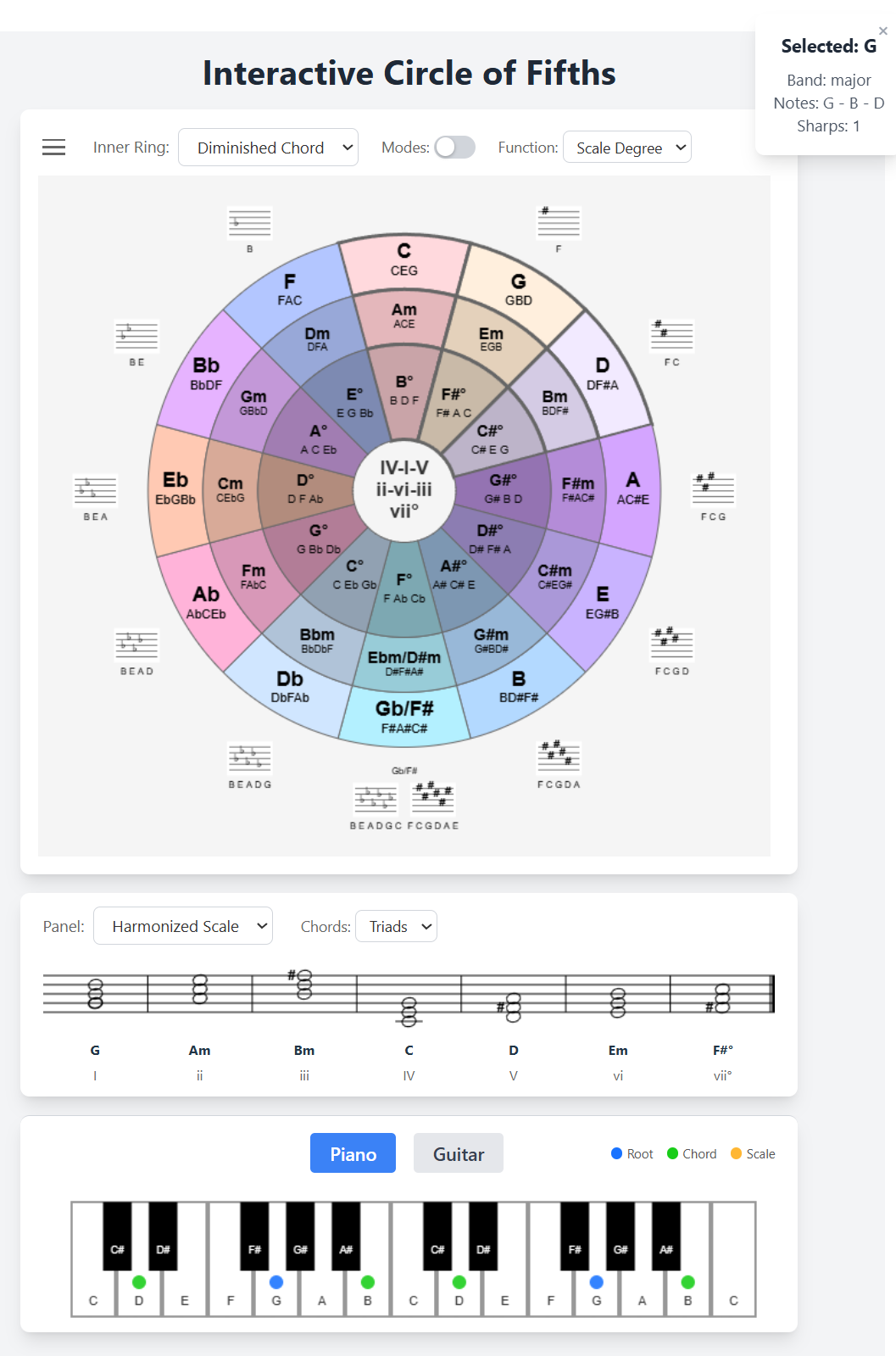
Eight months ago the Interactive Circle of Fifths didn’t exist. The idea hit me & I thought it would be a great exercise for Claude Opus 4.5. It was, and an excellent first project. Now it is linked to by thousands of websites, cited by frontier AI models over 4,800x.
That didn’t happen over night.
I spent a lot of money on ads initially, then in bursts over the first six months until Correlation Studio shipped. The ad work taught me to take small samples & measure the response rather than spend big on wholesale click campaigns. It also taught me to be patient, and that waiting for Google AdSense is purgatory. They never approved my ad sale.
Two months ago Correlation Studio was released and now it is seeing 3,000+ visitors per day. I employed the same pattern of iteratively tweaking & running ads in bursts to build an understanding of what works and what doesn’t.
Unfortunately, inviting random users to use Correlation Studio doesn’t work at all. The product’s ideal customer is a unicorn. They need to understand basic statistics, and they need to have correlation analysis as part of their workflow. Either that or their workflow must be such that it would benefit from correlation analysis, but they don’t know it. I knew that going into the project but I guess I didn’t realize how rare unicorns really are.
The main insight of the Correlation Studio work was actually related to the development of the corpus. At the outset I assumed we would have users and they would be building the content. Reality hit and I was forced to pivot. The site chatbot & curator Corrie was designed for this & I put her to good work. After the release I used the product to ingest over 7,500 datasets, all analyzed with AI. I ran over 10,000 experiments that generated 57,000 discoveries.

That turned out to be SEO gold, and the focus of the hero page. It significantly improved conversions for the ads & took some of the sting out of the spend. However, building it was very expensive. Downloads & storage are all essentially free, but the API calls are not. I spent over $1500 building it out, and it’s the gift that keeps on giving. I still update the corpus as trends are identified on the home page, providing, for example, the latest wildfire datasets.
Work on Correlation Studio is continuing, but at a much slower pace. My focus, when I have time for it, is on finding those users, listening to them closely, and rolling their feedback into new deliverables for the project. I just added computed columns last week at the request of a user. My key asset here is actually Boardy AI. He’s been instrumental in pulling together meetings and getting some eyes on the product. Just today I talked to a statistician who is building out some course work using the Portfolio tools. He will be our first true community user. Hope springs eternal.
Mappit is in many ways the opposite of Correlation Studio. No unicorns required. Although the ideal perfect customer is a news junkie & map nerd, in general it has a wide appeal. It’s intuitively obvious how to use, and people are quick to register for the free plan.
Like Correlation Studio, the great differentiator for Mappit is the corpus. At just over two weeks old, Mappit has been using frontier AI models to crawl the world 24/7, capturing global news events and local news stories for nearly 1,000 locations. After an initial birthday crawl to seed the data, the corpus currently stands at 33,000 news stories. A year from now it will be a time machine.
When it became obvious that Correlation Studio was not going to take off, I performed a classic pivot. The other idea that had been simmering in my mind came into focus and I started building a few days later. I took everything I had learned in the five months of building Correlation Studio and turned it into an application foundry for Mappit. From inception to release was only seven days. I was building around the clock, spending Fable tokens as if I had money to burn. From the starting idea, $500 and four days later I had a working prototype. It ripped off all the Correlation Studio infrastructure, design & idioms, even the encryption keys and much of its schema.
The buildout to version 1.0 took another three days, but it stuck. It basically worked as advertised, and I’ve been extending features and releasing incremental upgrades every day since. Just yesterday I released Mappit 2.0 and its list of features could fill another post. We now have smooth-scrolling MapLibre tiles, dedicated Newsfeed and Threads pages, a Daily Digest and Weekly Analysis. All of that building on a corpus that grows by the day.
At the two-week point, current traffic for Mappit is trending around 1,500-3,000 users per day. Thanks to the work of several directory services our domain rating is already a 20, much higher than Correlation Studio which sits at around 5 (invisible).
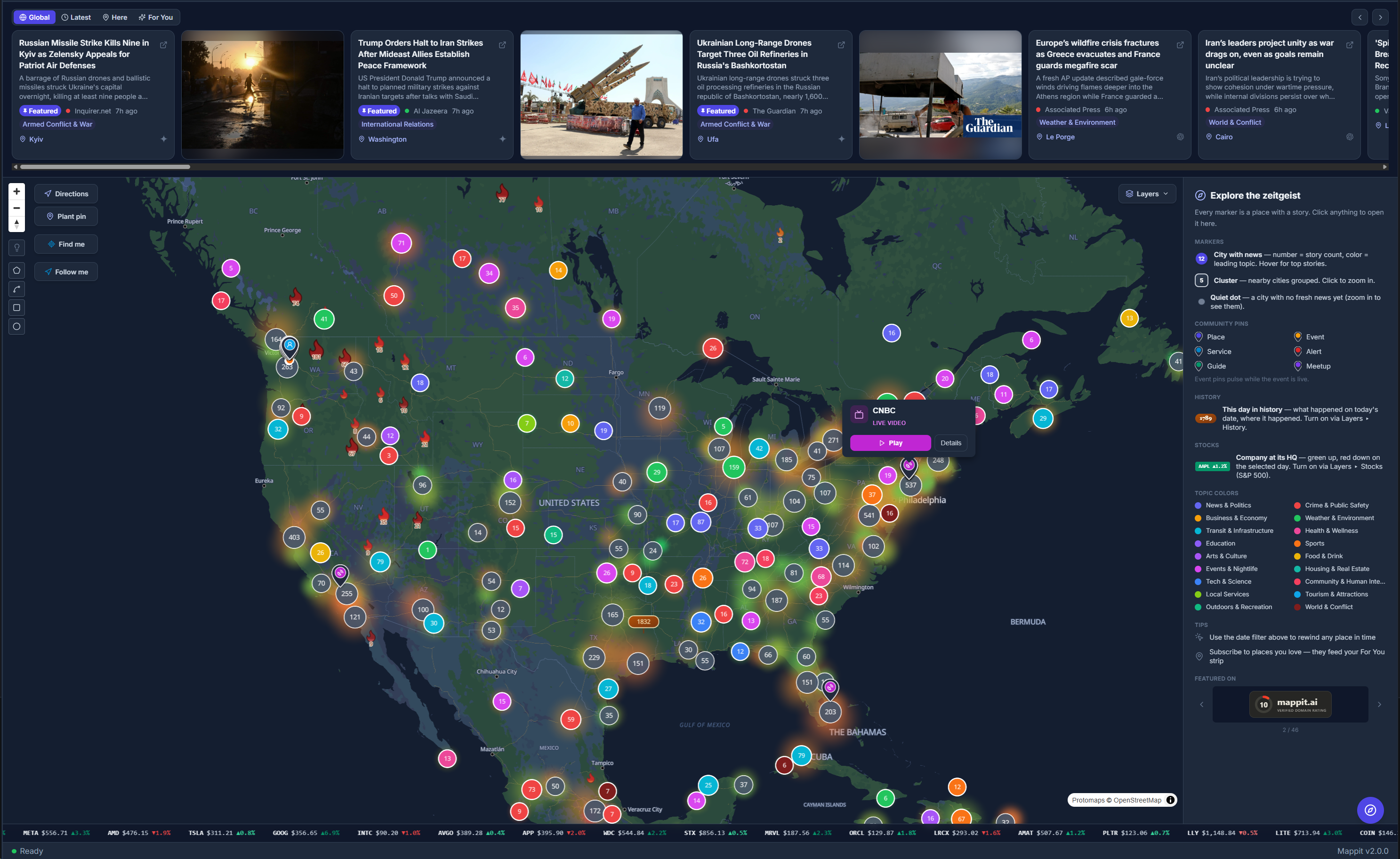
I applied the same lessons to Google Ads spending for Mappit as I did for Correlation Studio. The short bursts of ads allowed me to add forward-facing features, try different copy & images, and basically measure twice / cut once. Yesterday I did a $10 ad burst that brought in over 1,000 visitors and resulted in 25 registrations. A more realistic expenditure would be in the neighborhood of $100-200 per day, which is prohibitive for me.
At the crux of running Mappit is the corpus budget. Any money I would have spent on ads has been redirected into the daily crawls. Providing 24/7 news stories from the frontier AI models is not cheap, and it’s a continuously metered cost. Add to that nearly 1,000 location-specific crawls, which take about a week to process before they start again. Any budget inflation that happens for Mappit will be dedicated to increasing the periodicity and spread of the daily feeds. It’s currently locked in at $15/day, enough to provide nominal coverage in pursuit of our goals but a fraction of what the site could be processing per day.
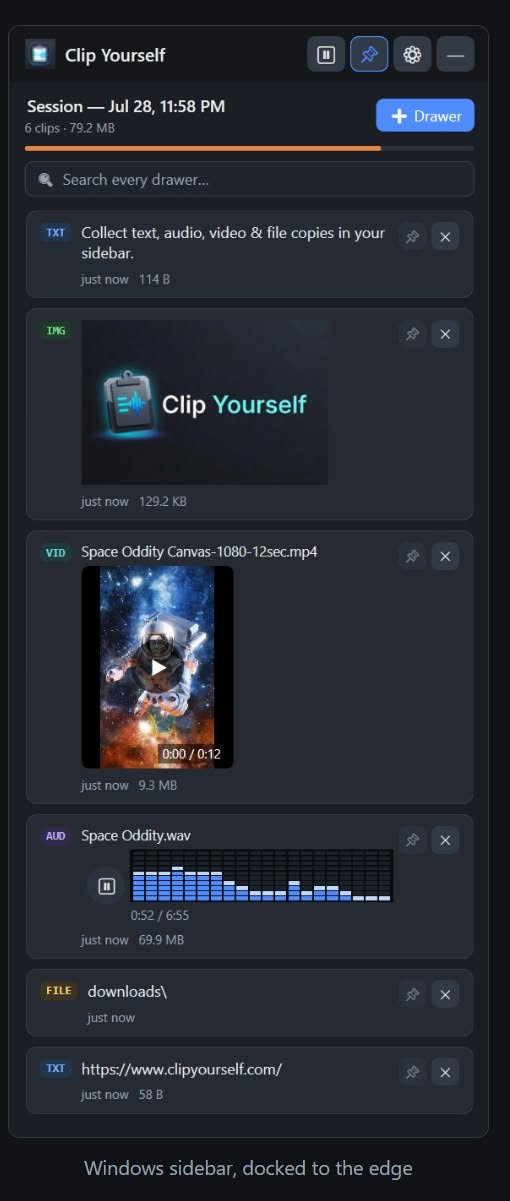
With all of the expenses, where will the revenue come from? Obviously the free sites – Interactive Circle of Fifths, Rango.Music & Clipyourself – will never make any money. They are offered 100% free as in beer, with no ads or revenue capture whatsoever. Clipyourself is, in fact, open-source.
Correlation Studio needs a small herd of unicorns who really know the product and can see where spending $50 on experiments that yield a return on their dollar is a good investment. There’s no other tool that can do what it does, and its valuable. Convincing people of that and finding their specific use case is vexing, but I’m convinced it’s possible.
Mappit is a simpler play. Right now there’s no revenue generating mechanism. The $2-15 monthly registration plans promise ad-free browsing, but there are currently no ads being served on the site. From the meager beginnings where we are now I envision 100,000 users per day on the site without breaking a sweat by sometime next year. Quite a dubious prediction based on two weeks of data, but I have faith where my confidence is unwarranted. Then we’ll introduce the $20 business tier, allowing users to buy into verified locations and have their promotional assets displayed in the map and in the story carousels.

Is it ever going to make money? I think so, but not in the short term. That’s why I’m playing the long game. I’m dedicating a substantial portion of my take-home pay every month to the VPS machines, storage & data transfers, as well as Cloudflare & Google Workspace accounts, domain registration, etc. That’s before the Mappit feed expenditures, so this is really a serious investment.
I’m prepared to ride it out. Provided I keep my day job & nothing dramatic happens in my life, I’m committed to keeping the doors open for both Correlation Studio & Mappit for the next year. At that point I’ll assess the project trajectories and anticipated break-even dates. If it’s all green lights at that point, I’ll invest for another year.
If you don’t invest in yourself, you can’t expect anyone else to invest in you, either. And I expect another year after that before we see real MRR.
It’s expensive and risky, but what’s the alternative? None of this feels like a game at all. It feels more like I’m programming as if my life depended on it. Which it does. I’ve been doing this for 35 years and managed to survive this long; pretty remarkable for being self-taught. But now with the onslaught of AI and the existential dread it brings to every software engineering discussion, what are the options? You can either get in early and play with the big boys or get stream-rolled into the unemployment line.
I’m here to stay. And I’m here to play. Hopefully for the longest game in town. This is what I do. If you want to see me in action, just watch this page. And check out my link farm when you’ve got time to spare:
The Interactive Circle of Fifths
https://interactivecircleoffifths.com
Clip Yourself
https://clipyourself.com
Rango.Music
https://rango.music
Correlation Studio
https://correlationstudio.com/hero?utm_source=wordpress&utm_campaign=hero
Mappit
https://mappit.ai/welcome?utm_source=wordpress&utm_campaign=welcome

